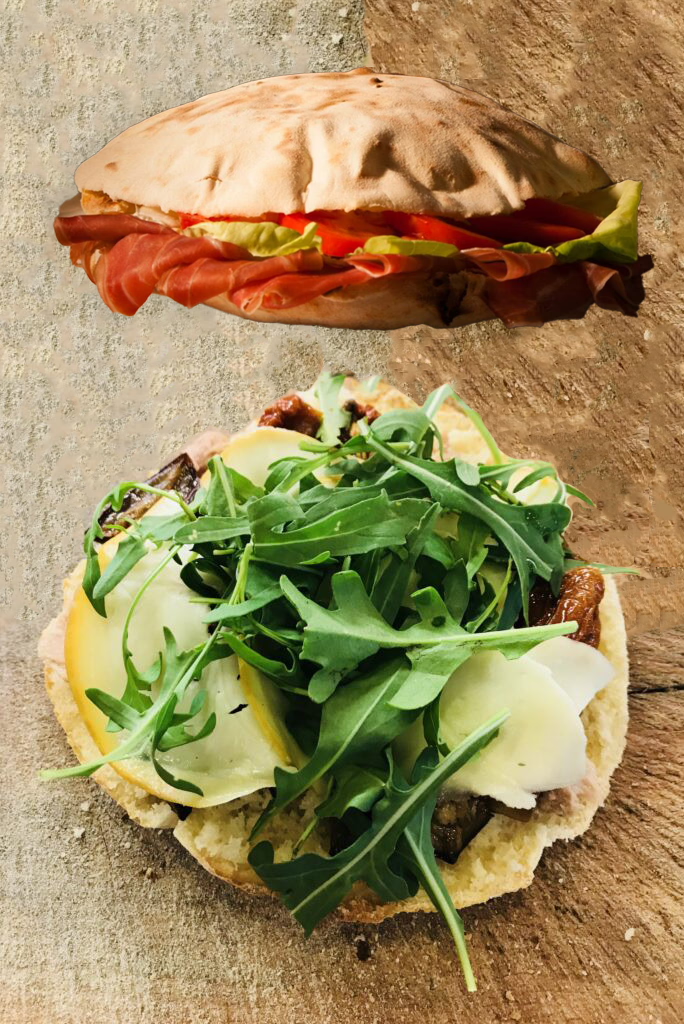
Pucce Salentina represents one of the most authentic symbols of traditional Salento cuisine, deeply rooted in Apulian folk customs. This distinctively shaped bread, often filled with simple yet flavorful ingredients, embodies the history of a region and the wisdom of generations of housewives. Making pucce Salentina at home means embarking on a sensory journey into the heart of Puglia, rediscovering the aromas and flavors of times gone by. If you’re curious about the authentic pucce Salentina recipe, you’re in the right place to discover how to bring this authentic Salento dish to the table.
Origins of Pucce Salentine
The history of pucce Salentina is rooted in the rural and maritime culture of Salento. Originally a humble and nutritious food, it was the bread of field workers and fishermen, easy to transport and store. Its simplicity is its strength: a leavened dough made from flour, water, and yeast, baked and then, in some variations, fried. The word “puccia” derives from the Latin “picea,” meaning a dark, dense dough, or from the Greek “pous,” meaning “pinch,” perhaps referring to the method of preparation or its shape. The pucce Salentina recipe, while maintaining a common base, has undergone small modifications over time, adapting to local availability and different family traditions.
Rural and Folk Tradition
Pucce Salentina is more than just bread; it’s a story of life, resilience, and community. It was the staple of daily meals, often dipped in new olive oil or stuffed with whatever the land offered: wild vegetables, fresh cheeses, or small scraps of meat. Making pucce was a moment of family sharing, especially in the countryside, where each family baked their own bread. In traditional Salento cuisine, pucce is a perfect example of how simple ingredients can transform into gastronomic excellence, an authentic expression of Puglia.
Local Influences and Historical Variations
Despite being a strongly localized dish, pucce Salentina has its own nuances depending on the area. In coastal areas, for example, it’s more common to find it stuffed with fresh fish or seafood, while inland, fillings based on vegetables or local cured meats prevail. Some historical variations include the addition of pork cracklings to the dough, giving it a bolder, more rustic flavor. Regardless of the differences, the traditional Apulian pucce recipe remains faithful to the essence of a bread that’s fragrant on the outside and soft on the inside.
Traditional Ingredients of Salento Pucce
To prepare an authentic Salento pucce, the ingredients must be top-quality and as simple as possible. The basic Salento pucce recipe is as follows:
Basic Ingredients:
- 500g of type “0” soft wheat flour (or a mix of type “0” and re-milled durum wheat semolina for extra crunchiness)
- 300-350ml of warm water
- 10g of fresh brewer’s yeast (or 3-4g of dry brewer’s yeast)
- 10g of fine salt
- A teaspoon of sugar (helps the dough rise)
Optional Ingredients for the Filling (depending on tradition):
- Extra virgin olive oil from Salento
- Fresh ripe tomatoes
- Fresh mozzarella or cacioricotta
- Local cured meats (cooked ham, capocollo)
- Grilled or pickled vegetables (aubergines, courgettes, peppers)
- Tuna in oil, marinated anchovies, boiled octopus
- Chickpeas or broad beans (for a more rustic version)
Preparing Pucce Salentine
Preparing pucce Salentine is a process that requires patience and a love of tradition.
Dough Preparation:
- In a large bowl, dissolve the fresh yeast (or dry yeast) in about 100ml of warm water and a teaspoon of sugar. Let it sit for about 10 minutes until it foams slightly.
- Pour the flour into a stand mixer or a large bowl. Add the yeast mixture and begin kneading. Gradually add the remaining warm water, continuing to knead.
- When the dough begins to thicken, add the salt and continue kneading for about 10-15 minutes, until the dough is smooth, elastic, and homogeneous. If kneading by hand, turn the dough out onto a lightly floured surface and knead vigorously.
- Shape the dough into a ball, place it in a lightly oiled bowl, cover with cling film, and let it rise in a warm, sheltered place for about 2-3 hours, or until doubled in volume.
Formation and Second Leavening:
- Once risen, turn the dough out onto a pastry board and gently deflate it. Divide it into 6-8 equal portions (depending on the desired size).
- Form balls, then flatten them slightly with the palm of your hand to obtain the classic pucce shape, slightly flattened and with a diameter of about 15-20 cm.
- Arrange the pucce on a baking tray lined with baking paper, cover again with a clean cloth and leave to rise for another 30-45 minutes.
Cooking:
- Preheat the oven to 220°C (static).
- Bake the pucce for about 15-20 minutes, or until golden brown and cooked through inside.
- Remove the pucce from the oven and, if desired, brush them with a drizzle of hot extra virgin olive oil to make them even more fragrant.
Traditional Frying (Optional Variation)
Some versions of the Salento pucce recipe call for frying, which adds a unique crunchiness. After the second rise, you can fry the pucce in plenty of hot peanut oil (about 170-180°C). Fry them a few at a time on both sides until they are puffed up and golden brown. Drain them on paper towels. This is a way to enjoy a typical Salento dish that highlights its crunchiness.
Common Mistakes to Avoid
A common mistake is using water that’s too hot, which can kill the yeast. Another mistake is not letting the dough rise enough, compromising its softness. Finally, baking the pucce too quickly or at too low a temperature will make it pale and undercooked inside.
Traditional Salento Tips
Grandmothers’ secrets for perfect pucce include using room-temperature ingredients, slow and natural leavening, and patience in kneading the dough. It’s said that adding a drizzle of olive oil to the dough makes the pucce softer and more durable. The quality of the extra virgin olive oil is essential, both in the dough and for seasoning the filling.
Local Variations
As mentioned, puccias vary greatly. In the coastal areas, “puccia alla marinara” is stuffed with shrimp, calamari, and mussels. Inland, “puccia rustica” may contain wild chicory, fava beans, and local cheese. Versatility is one of its strengths.
When to Eat Pucce Salentine
Pucce Salentine are a dish enjoyed year-round, but they take on a special flavor during popular festivals and fairs. They’re perfect as street food on summer evenings, but also as a main dish for an informal family lunch. They’re a symbol of conviviality, perfect for any occasion that celebrates the richness of Salento’s traditional cuisine.
Recommended Pairings
Pucce Salentina is incredibly versatile. It can be enjoyed on its own, perhaps accompanied by good homemade bread and traditional products such as taralli, local cheeses, and cured meats. For a complete meal, it pairs perfectly with fresh salads. Apulian wines, such as a Negroamaro or Primitivo, enhance its flavor. A good local craft beer is another excellent option.
Where to Enjoy Salento’s Pucce Salentine in Salento
To savor authentic Salento pucce, it’s best to visit typical Salento trattorias or historic bakeries. Many traditional agritourism establishments also offer pucce prepared according to traditional recipes. Look for establishments that use locally sourced ingredients and keep Salento’s culinary traditions alive.
Useful Insights
If you’re fascinated by the pucce salentina recipe, we invite you to discover other wonders of Salento cuisine. Exploring the traditional cuisine of Salento is a journey through flavor and culture.
Pucce Salentina is a celebration of simplicity, an embrace of flavors that tells the story of a generous land and a people proud of their roots. Preparing it at home is a way to bring a piece of Salento into your kitchen, a loving gesture that celebrates the region’s traditional cuisine.